- It re-times, it does not create: a study moves basis into 5-, 7- and 15-year classes so more of it is deductible now. The total recovered never changes.
- The window reopened: 100% bonus depreciation applies to qualifying property acquired after January 19, 2025 — but the building shell can never qualify.
- The deduction needs a door: rentals are passive by default, so real estate professional status, the seven-day rule, or passive income decides whether you use it.
- You settle up at the exit: everything taken above the straight-line path comes back as ordinary income at up to 37%, not at the 25% ceiling.
Ask a room of real estate investors to name the tax strategy they hear about most and cost segregation wins easily. The pitch is genuinely compelling: an engineering study re-sorts the components of a building you already bought, a large share of the purchase price turns out to be depreciable over five or fifteen years instead of thirty-nine, and current law lets you deduct all of that in the first year. On a $5,000,000 acquisition the first-year depreciation can go from about $100,000 to more than $1,300,000.
What the pitch usually leaves out is the second half. That deduction is a passive loss for most of the people who hear the pitch, which means it is not deductible against their income at all — it sits on Form 8582 and waits. Whether you are on the right side of that line is decided by a different part of the code entirely, and for most investors the answer turns on whether they, or their spouse, qualify as a real estate professional. This is the whole picture: what a study does, why the timing is unusual right now, which asset classes accelerate most, the gate that decides whether any of it matters, and what you pay at the exit.
Part I — What a study actually does
Buy an income property and the tax code hands you one very slow deduction. Residential rental property is recovered over 27.5 years and nonresidential real property over 39, both on the straight-line method, and neither number is negotiable.1 A $4,000,000 depreciable basis on a 39-year life produces about $102,564 of depreciation a year — the same number, every year, for thirty-nine years.
A cost segregation study does not change that. What it changes is how much basis is subject to it. The IRS’s own audit guide describes the exercise plainly: when only lump-sum costs are available, cost estimating techniques are used to allocate those costs to individual assets — land, land improvements, buildings, equipment, furniture and fixtures.3 Components that are not structural components of the building come out of the 39-year bucket and land in the 5-, 7- and 15-year MACRS classes instead.4
Land comes out first, at highest and best use, and is never depreciable. Everything the study achieves happens inside the remaining $4,000,000.
Illustrative allocation. Sources 1, 3 and 4.
The line the whole exercise runs along was drawn in 1962. Section 1245 property includes depreciable personal property; section 1250 property is real property that is not section 1245 property.6 What stays on the building’s long life is spelled out in a regulation written for the old investment tax credit, which defines structural components to include walls, partitions, floors, ceilings, windows, doors, central heating and air conditioning, plumbing, electric wiring and lighting fixtures, sprinklers, elevators and escalators.5 Everything on that list is a ceiling on any study’s percentage, no matter how the property is used. The same regulation cuts the other way, though: property contained in or attached to a building is still tangible personal property when it is in the nature of machinery — its own examples run to display racks and shelves, grocery counters, refrigerators, and a hydraulic car lift, “although annexed to the ground.”5
A study is therefore looking for two different things, and the distinction matters at the exit. The first is genuine personal property — appliances, carpeting, furniture and fixtures, equipment — which is section 1245 property and typically lands in the 5- or 7-year class.4,6 The second is land improvements: paving, roads, sewers, drainage facilities, site utilities, lighting and fencing. These are recovered over 15 years under asset class 00.3 — which by its own terms covers improvements “whether such improvements are section 1245 property or section 1250 property,” and in practice most of them are section 1250 real property.4 Both accelerate. They do not recapture the same way, which is the subject of Part V. And note what is not on that list: general clearing, grading and landscaping is ordinarily part of the cost of the land, and the land is never depreciable.4,10
That those old investment-credit rules still govern is not an assumption — it is a holding. In Hospital Corp. of America, the Tax Court held that the pre-1981 precedent for identifying tangible personal property survived the credit’s repeal and continued to apply under ACRS and MACRS, and that the statutory bar on component depreciation reached only section 1250 property. The IRS acquiesced in that much in Action on Decision 1999-008, while disagreeing about the specific components at issue.8 The same case supplies the most useful mechanic in the field: a single electrical system can be split, with the share of the load serving equipment treated as section 1245 property and the share serving the building treated as section 1250.8
Whether a particular item is “inherently permanent” — and therefore locked to the building — is tested under the six factors from Whiteco Industries: whether the item can be and has been moved, whether it was designed to stay put, whether circumstances suggest it will have to move, how substantial removal would be, how much damage removal causes, and how it is affixed to the land.9
Part II — Why the timing is unusual right now
Reclassification alone would be worth something — a 15-year asset deducts far faster than a 39-year one. What makes the strategy loud rather than merely useful is bonus depreciation, and bonus depreciation has just been through a round trip.
Under the Tax Cuts and Jobs Act the 100% allowance was scheduled to fade: 80% in 2023, 60% in 2024, 40% in 2025, 20% in 2026, and nothing after that.1 The One Big Beautiful Bill Act, enacted July 4, 2025, rewrote §168(k)(1)(A) to provide a first-year allowance equal to 100% of the adjusted basis of qualified property, and struck the phase-down table out of the Code entirely.2,1 There is no sunset written into the provision — which means permanent under current law, not permanent in any stronger sense.
The effective date is the part that catches people. The change applies to property acquired after January 19, 2025 — not placed in service after that date.2 And property is not treated as acquired after that date if a written binding contract for its acquisition was entered into on or before it, under rules that also fix when a contract counts as binding and when the acquisition date falls.29 A deal that went under contract in 2024 and closed last month is on the old phase-down, not the new 100%. That is a diligence question, not a tax-return question, and it needs answering before anyone models a first-year deduction.
The closing date does not decide this. The binding-contract date does — which makes it a diligence item, not a tax-return item.
Illustrative, applying first-year conventions. Sources 1, 2 and 29.
Three more boundaries are worth stating plainly:
- The building never qualifies. Bonus depreciation reaches only property with a recovery period of 20 years or less. Residential rental property is 27.5-year property and nonresidential real property is 39-year, so the shell is permanently outside it. This is precisely why a study is the prerequisite — without one, there is no short-life property for bonus to attach to.1
- Used property counts. Bonus depreciation is not limited to new construction. Property you acquire qualifies as long as you had not used it before and the acquisition is not from a related party or by carryover basis.1 An acquisition of an existing, fully leased asset is the ordinary case, not the exception.
- It is automatic unless you opt out. The allowance applies by default; declining it requires an affirmative election, made by class of property, that is revocable only with the Commissioner’s consent.1 There are years when electing out is the right answer — a low-income year for a taxpayer who would waste the deduction is the obvious one.
Section 179 expensing is a separate lever and, for real estate, usually the lesser one. Its cap was raised substantially in 2025, but §179 cannot create or increase a net loss: it is limited to aggregate taxable income from the active conduct of a trade or business, with the excess carried forward. Bonus depreciation has no such limit and can drive a return to a loss.26,2 For an investor whose entire objective is a deductible loss, that difference decides the ordering.
The swing is real. Whether it is usable is the subject of Part IV, and for most investors the answer is no.
Illustrative. Assumes property acquired after January 19, 2025. Sources 1 and 2.
One thing that number is not: a permanent tax saving. Depreciation recovers cost, and a property has only so much cost to recover. Every dollar deducted in year one is a dollar that will not be deducted in years two through thirty-nine, and basis falls as deductions are taken.24 The benefit is the time value of money on the difference — which is a real benefit, and a smaller one than a first-year headline implies.
Both paths recover exactly $4,000,000 — the whole basis, and no more. The gap between them is the entire economic benefit, and it is repaid through smaller deductions later and through recapture at sale.
Illustrative. Sources 1 and 24.
Part III — Which asset classes accelerate most
Not every building has the same amount to find. A distribution warehouse is a slab, a shell and a roof; a full-service restaurant is a dense package of equipment, finishes and specialty systems wrapped in a small building. The table below is the ranking that circulates most widely in the industry, reproduced faithfully and re-drawn.
Read it with one caveat firmly in mind, because it is the caveat the IRS itself supplies. No code section, regulation, revenue ruling or IRS publication assigns a percentage of purchase price to any asset class. Ranges like these are practitioner convention distilled from completed studies. The audit guide describes the “rule of thumb” approach — estimating section 1245 property as a fixed percentage of project cost by relying on previously determined industry averages — and instructs examiners to view it with caution, because it lacks sufficient documentation to support its allocation.3 A table is a screening tool for deciding whether to commission a study. It is not a study, and it is not a number to put on a return.
Elevation’s two asset classes — self-storage and manufactured housing communities — sit in the top six for the same structural reason: most of the improvement is outside the building.
Source ranking and ranges: REPS RE Pro Roundtable. Practitioner estimates, not IRS figures — see source 3 on why a percentage table is not a substitute for a study.
The ordering is directional rather than strict, and the chart shows why: the ranges overlap almost completely, and several rows sit out of sequence with their own numbers — car washes are ranked eighth on a 30–45% range while marinas rank seventh on 25–40%. What the table gets right is the physics. Four traits do the work.
Land improvements are the quiet engine. Asset class 00.3 covers roads, sewers, drainage, fences and landscaping, and carries a 15-year recovery period — which is why land-heavy property types cluster at the top of the table.
Sources 3, 4, 5 and 8.
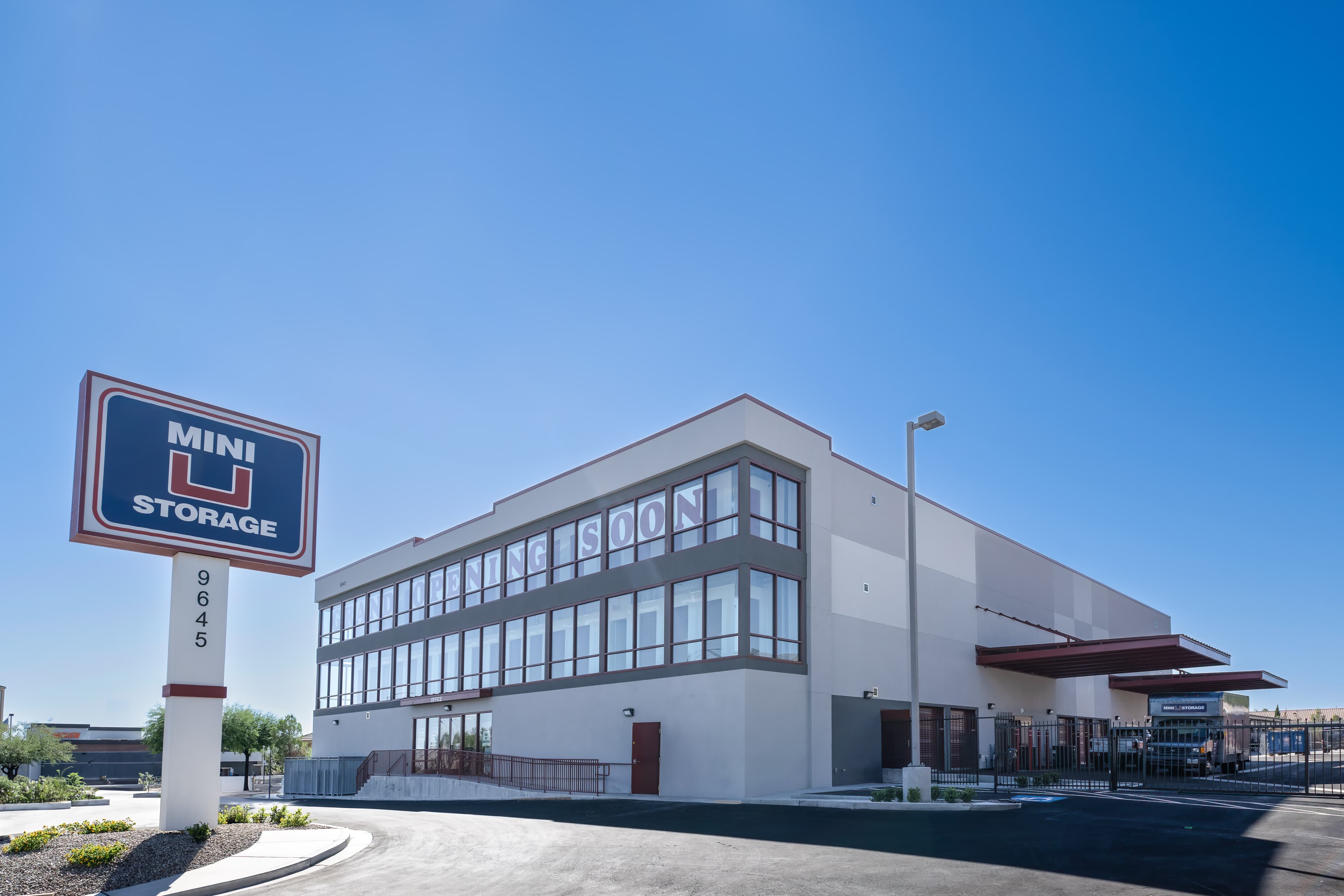
Elevation owns two of the classes near the top, and it is worth being concrete about why. In a land-lease manufactured housing community, the depreciable basis is concentrated in site infrastructure — roads and drives, sewers, drainage facilities and fences are all named outright among the examples in Rev. Proc. 87-56 asset class 00.3, and the water and site electrical distribution serving the pads is generally classified there by analogy — each recovered over 15 years.4 A self-storage facility is the same story with a different roof line: the buildings themselves are nonresidential real property on 39 years, while the paving, perimeter fencing and gates, site lighting and drainage are land improvements, and the access control, security systems and office equipment are personal property.1,4
One honest limitation: the IRS has published industry-specific cost segregation matrices for exactly seven property types — retail, restaurants, pharmaceutical and biotechnology, hotel/casino and gaming, auto dealerships, auto manufacturing, and residential rental property. Neither manufactured housing communities nor self-storage is on that list, and neither is most of the top of the table.3 Classifications for these asset classes come from the general rules, applied property by property, which is an argument for a detailed engineering study rather than against the asset class.
The comparison also shows the ceiling. In both cases the structural shell stays on its long life no matter how the study is written.
Sources 1, 3, 4 and 5.
Part IV — The gate most investors never clear
Everything to this point is about producing a deduction. This part is about whether the deduction does anything, and it is where most of the marketing goes quiet.
Section 469 sorts income and loss into buckets, and for real estate it goes a step further than it does anywhere else: a rental activity is a passive activity without regard to whether or not the taxpayer materially participates.12 Work eighty hours a week on your building and the loss is still passive. A passive loss is disallowed to the extent it exceeds passive income, reported on Form 8582, and carried forward indefinitely — usable later against passive income, or freed when you dispose of your entire interest in the activity in a fully taxable transaction to an unrelated party.12,28
There is a small door for modest incomes: an individual who actively participates may deduct up to $25,000 of rental losses against other income. But that allowance is reduced by 50 cents for every dollar of modified AGI above $100,000, which zeroes it out at $150,000 — below the threshold at which someone is even an accredited investor.12 For the audience that commissions cost segregation studies, this door is already closed.
So a $1,349,744 first-year deduction meets one of four fates.
Door four is the default outcome for a high-earning professional who owns a rental. It is not a failure of the study — the study worked. The loss is simply waiting.
Sources 12, 13, 14, 15, 19 and 28.
Door one: real estate professional status
This is the door the strategy is usually sold alongside, and the one worth understanding in detail. Section 469(c)(7) turns off the per-se passive rule for a taxpayer who, in that year, performs more than half of all their working hours in real property trades or businesses in which they materially participate, and performs more than 750 hours of services in those businesses. On a joint return the requirements are met if and only if one spouse satisfies them separately — hours cannot be pooled.12
The 50% test is the one that fails. Work 2,000 hours a year as a physician or an attorney and you would need more than 2,000 documented real estate hours on top of it — which is why the qualifying household usually pairs one high-earning spouse with one who genuinely runs the real estate.
Sources 12, 13, 14, 16 and 27.
Qualifying is necessary and not sufficient, and this is the most commonly missed step in the entire strategy. The regulation says the per-se rule does not apply to a qualifying taxpayer — and then says a rental real estate activity of that taxpayer is still passive unless the taxpayer materially participates in the activity.14 The Ninth Circuit said the same thing in Gragg, rejecting the argument that professional status confers automatic material participation.16 Material participation is proved activity by activity, under one of the seven tests in the regulations.13
Because each rental is a separate activity by default, an owner with eight properties has eight material-participation problems. The fix is the election under Reg. §1.469-9(g) to treat all interests in rental real estate as a single activity, filed as a statement with the original return and binding for future years in which you remain a qualifying taxpayer.14 One trap inside it deserves naming: if any interest in the grouped activity is held as a limited partnership interest, the combined activity is generally treated as a limited partnership interest for material-participation purposes — unless the gross rental income share from those LP interests stays under ten percent.14 A single fund investment folded into the group can compromise the whole election.
Two things about door one are worth knowing before you walk through it. The first is that it keeps paying after the loss years end: a real estate professional who participates more than 500 hours in a rental activity in the year — or did so in five of the prior ten — falls inside a safe harbor that treats that activity’s income as derived in the ordinary course of a trade or business, and therefore outside the 3.8% net investment income tax.18 The deduction is the reason people qualify; the exemption on the income is the reason it stays worth qualifying.
The second is that the whole thing is won or lost on records. The regulations are genuinely permissive on form — participation may be established “by any reasonable means,” and contemporaneous daily logs are not strictly required — but the Tax Court has been clear that this does not license a post-event “ballpark guesstimate,” and the IRS asks for an appointment book, calendar or narrative summary showing the services performed and the hours spent.13,17,27 If the status is worth claiming, it is worth logging as the year unfolds.
The full treatment of the hour tests, all seven material-participation tests, the recordkeeping standard and the NIIT safe harbor is in our companion piece, Real estate professional status: what the tax benefits really are.
Door two: the seven-day rule
The widely marketed “short-term rental loophole” does not use §469(c)(7) at all. A regulation removes an activity from the definition of a rental activity entirely when the average period of customer use is seven days or less.15 If it is not a rental activity, the per-se passive rule never attaches, and the owner needs only to clear one of the seven material-participation tests — no 750 hours, no more-than-half test. It is a different statute reaching a similar result, and the net investment income analysis has to be run separately.
Door three: you already have passive income
This one gets almost no attention and is the most accessible of the three. Section 469 disallows only the net passive loss — the amount by which aggregate losses from all passive activities exceed aggregate income from all passive activities.12 Passive income generally absorbs passive losses dollar for dollar, and it does not matter which activity produced either one. Operating income allocated on a real estate fund K-1 is passive income. So is income from any other passive activity you hold. No hours, no election, no status. Two limits are worth knowing: items from a publicly traded partnership are netted separately against that partnership’s own losses rather than pooled, and the regulations can recharacterize certain income as non-passive.12
Door four: the default
A surgeon who buys a self-storage facility, commissions a study, and does not qualify as a real estate professional gets a $1,349,744 deduction that offsets exactly nothing this year. It goes on Form 8582 and carries forward. That is not a failure of the study — the basis really was reclassified, and the deduction really does exist. It is simply parked until there is passive income to absorb it or the property is sold in a fully taxable disposition.12,28
And one limit applies even to those who clear the gate. The excess business loss limitation caps how much aggregate business loss a noncorporate taxpayer can deduct against non-business income in a year — the threshold for tax years beginning in 2026 is $256,000, or $512,000 on a joint return, and the 2025 legislation removed the provision’s sunset. The disallowed amount is not lost; it becomes a net operating loss in the following year, itself deductible against no more than 80% of taxable income.19,20,2 A seven-figure first-year deduction does not become a seven-figure first-year offset even in the best case.
Part V — What it costs at the exit
The part of the pitch that gets shortened to “you’ll deal with recapture later” deserves its own section, because the direction of the trade is the opposite of what most people assume.
Start with the building. Depreciation taken on it is not ordinary income on sale; it is unrecaptured section 1250 gain, taxed at a maximum rate of 25%.7 Ordinary section 1250 recapture is generally zero on a building placed in service after 1986, because “additional depreciation” means only the excess over straight line, and real property has been required to use the straight-line method ever since — so there is no excess.6,1
Now the reclassified property, which is two different animals. The 5- and 7-year personal property is section 1245 property: depreciation on it is recaptured as ordinary income, taxed at ordinary rates of up to 37%.6,20 The 15-year land improvements — the paving, fencing and site utilities that make up the larger share of most studies — are not section 1245 property; they are generally section 1250 property. But 15-year property is depreciated on the 150% declining balance method rather than straight line, and bonus depreciation is faster still, so everything taken above the straight-line path is additional depreciation and comes back as ordinary income under §1250(a).1,6
Put those together and the trade is visible: every dollar of depreciation taken faster than straight line is a dollar that comes back at ordinary rates of up to 37%, instead of at the 25% ceiling that would otherwise have applied to it. Cost segregation gives up a rate advantage in order to buy a timing advantage. Whether that is a good trade depends on your discount rate, your hold period, and what the deferred tax earns in the meantime.
Depreciation reduces basis whether or not it was claimed — the statute says allowed or allowable — so simply not taking it is never the answer.
Sources 6, 7, 20 and 24.
Three further exit mechanics are worth knowing before you model anything:
- A 1031 exchange defers this, but not cleanly. Section 1245 caps the ordinary recapture recognized in a like-kind exchange at the gain otherwise recognized plus the fair market value of non-§1245 replacement property — so exchanging out of a heavily cost-segregated asset into replacement property with little personal property can produce ordinary income inside an otherwise deferred exchange.6
- An installment sale does not spread it. Recapture income under §§1245 and 1250 is recognized in full in the year of disposition; only the gain in excess of recapture is eligible for the installment method.25
- A study also unlocks a deduction most owners miss. By default the building and all its structural components are treated as one asset, so an owner who tears off a roof keeps depreciating the discarded roof alongside its replacement. The partial disposition election lets you deduct the remaining adjusted basis of the retired portion — and the regulation lists a study allocating an asset’s cost to its individual components among the reasonable methods for determining that basis.23 On a property with an active capital plan, this is a recurring benefit rather than a one-time one.
Part VI — If you already own the building
Studies are usually discussed in the context of an acquisition, but the more common real situation is an owner three years into a hold who has never done one. That is fixable, and the mechanism is unintuitive.
You cannot fix it by amending returns. A change in the depreciation method, recovery period or convention of an asset is a change in method of accounting, requiring the Commissioner’s consent — and once a method has been used on two consecutively filed returns it is adopted, even if it was wrong.4,22 The IRS audit guide tells examiners exactly what to do with the alternative: amended returns based on a study performed after the original return was filed “should generally be disallowed on the basis that the taxpayer is attempting to make a retroactive method change.”3
The right route is Form 3115 under the automatic change procedures. The applicable change — impermissible to permissible method of accounting for depreciation — carries designated automatic accounting method change number 7, and the missed depreciation from all prior years, open and closed alike, comes through as a negative §481(a) adjustment.21,22 A negative adjustment is taken into account entirely in the year of change; the four-year spread applies to positive adjustments, which increase income.21
A timely automatic Form 3115 also buys audit protection: the IRS will not require a change to the same item for a year before the year of change.
Sources 3, 4, 21 and 22.
Two timing rules bound this. The automatic change generally requires that the impermissible method was used in at least the two taxable years immediately preceding the year of change — a building placed in service only last year is handled differently.21 And the automatic procedures cannot be used repeatedly: a taxpayer that changed, or applied to change, its method for the same item during any of the five taxable years ending with the year of change is barred from the automatic route for that item.21 For a current-year acquisition the cleanest answer remains the simplest — have the study finished before the return is filed.3
Part VII — What makes a study survive
Neither the IRS nor any group or association of practitioners has established requirements or standards for the preparation of cost segregation studies, and there are no prescribed qualifications for preparers — but the audit guide is candid that a study by a construction engineer is more reliable than one by someone with no engineering or construction background.3 That absence of formal standards is the reason quality varies so widely, and the reason it matters so much.
The guide lists thirteen principal elements of a quality study. The ones that decide examinations in practice are the unglamorous ones: a detailed description of the methodology, unit costs supported by an engineering take-off, a reconciliation of total allocated costs to total actual costs, an explanation of the legal analysis behind each classification, and an explicit treatment of indirect costs.3 The guide also ranks the methodologies, calling the detailed engineering approach from actual cost records the most methodical and accurate, and telling examiners to view the rule-of-thumb approach with caution.3
AmeriSouth XXXII is the case to read before commissioning anything. The Tax Court rejected most of an apartment owner’s study, holding that the water distribution system, sanitary sewer, gas lines, site electrical, vent hoods, sinks and disposals, finish carpentry, millwork, interior windows and special painting were all section 1250 property on the building’s life — and that site preparation and earthwork was not depreciable at all.10 An aggressive study does not fail quietly. It fails item by item, years later, with interest.
Part VIII — Quick answers
Does a study lower my total tax?
Not by itself. It accelerates deductions and defers tax; basis falls as deductions are taken and the deferral is repaid through smaller deductions later and through recapture at sale.24,6 The economics are time value plus, in some cases, the ability to use a loss in a high-rate year that would otherwise be wasted.
I’m a passive investor in a fund. Does this help me?
Indirectly, and in a specific way. Accelerated depreciation at the fund level flows through on your K-1 and generally shelters distributions from that fund. What it will not do is offset your wages, and real estate professional status will not change that for an interest you hold as a limited partner.12,13
Can I do a study on a property I bought years ago?
Yes — through a Form 3115 method change with a §481(a) catch-up taken in the year of change, not through amended returns.21,22,3
Does a real estate license help?
Only to the extent licensed work generates qualifying hours in a business you own or materially participate in. The license itself is irrelevant to the tests.12
When is a study not worth it?
When you cannot use the loss and have no line of sight to passive income; when the depreciable basis is small enough that the fee eats the benefit; when the hold period is short enough that recapture arrives before the deferral has earned anything; and when the purchase agreement has already allocated the price in a way that binds you.11
What about property that went under contract before January 20, 2025?
A written binding contract entered into on or before January 19, 2025 keeps the property on the old phase-down schedule regardless of when it closes.2,29 Check the contract date before modeling anything.
The bottom line
Cost segregation is a real and well-established strategy resting on a real holding — Hospital Corp. of America — and current law makes it unusually potent, because 100% bonus depreciation applies to qualifying property acquired after January 19, 2025 and the phase-down table has been struck from the Code.8,2,1 On the right asset, a study can move a quarter to two-fifths of the depreciable basis into classes that deduct immediately.
But the deduction and the benefit are two different things. The deduction comes from an engineer. The benefit comes from §469, and the question it asks is not how good your study is — it is whether you, or your spouse, are genuinely in the real estate business. For an investor who clears that gate, cost segregation is among the most valuable tools in the code. For one who does not, it produces an impressive number on a schedule and a carryforward that waits. Know which investor you are before you commission the study, run the exit math alongside the entry math, and get the answer from your own CPA rather than from a chart.
Sources
- 26 U.S.C. §168 — Accelerated cost recovery system: §168(b)(3) (straight-line method required for real property), §168(c) (27.5-year residential rental and 39-year nonresidential recovery periods), §168(e) (classification of property, including §168(e)(3)(E)(vii) placing qualified improvement property in the 15-year class), §168(g) (alternative depreciation system), and §168(k) (additional first-year depreciation), including §168(k)(1)(A) (100%), §168(k)(2)(A)(i)(I) (recovery period of 20 years or less), §168(k)(2)(E) (used property), §168(k)(7) (election out) and §168(k)(10) (the 40% first-year election). https://www.law.cornell.edu/uscode/text/26/168
- One Big Beautiful Bill Act, Pub. L. 119-21 (July 4, 2025) — §70301 (restoring 100% bonus depreciation, repealing the §168(k)(6) phase-down, and applying the change to property acquired after January 19, 2025), §70306 (§179 expensing limits), §70307 (qualified production property under new §168(n)), and §70601 (making the §461(l) excess business loss limitation permanent). https://www.congress.gov/bill/119th-congress/house-bill/1/text
- IRS Publication 5653, Cost Segregation Audit Techniques Guide (rev. Feb. 2025) — what a study is, the six methodologies and their relative reliability, the thirteen principal elements of a quality study, purchase price allocation (land first, at highest and best use), the case-law tables, and the industry-specific matrices. The guide carries its own disclaimer that it is not an official pronouncement of law and cannot be cited as such. https://www.irs.gov/pub/irs-pdf/p5653.pdf
- IRS Publication 946, How To Depreciate Property, and Rev. Proc. 87-56, 1987-2 C.B. 674 — the property classes and Appendix B Table B-1 class lives, including asset class 00.3 (land improvements: roads, sewers, drainage, fences, landscaping — 15-year GDS), asset class 00.11 (office furniture and fixtures — 7-year) and asset class 57.0 (distributive trades and services — 5-year); also the treatment of land, the adoption of a method of accounting, and the §481(a) adjustment. https://www.irs.gov/publications/p946
- Treas. Reg. §1.48-1(e)(2) — the definition of “structural components,” which is what keeps walls, floors, ceilings, windows, doors, central heating and air conditioning, plumbing, electrical wiring, sprinklers, elevators and escalators on the building’s own recovery period. https://www.law.cornell.edu/cfr/text/26/1.48-1
- 26 U.S.C. §1245 and §1250 — the statutory dividing line between personal property and real property, and the recapture rules that follow from it: §1245(a)(1)-(2) (ordinary income recapture and recomputed basis), §1245(b)(2) (transfers at death), §1245(b)(4) (the limit in a like-kind exchange), §1250(b)(1) (additional depreciation) and §1250(c). https://www.law.cornell.edu/uscode/text/26/1245
- 26 U.S.C. §1(h)(1)(E) and §1(h)(6) — unrecaptured section 1250 gain, taxed at a maximum rate of 25%. https://www.law.cornell.edu/uscode/text/26/1
- Hospital Corp. of America v. Commissioner, 109 T.C. 21 (1997) — the decision holding that pre-1981 investment-tax-credit precedent for identifying tangible personal property survived into ACRS and MACRS, and that a building system can be split between §1245 and §1250 by the share of load it carries to equipment. See also IRS Action on Decision 1999-008, acquiescing in that holding while disagreeing on the specific properties. https://www.irs.gov/pub/irs-aod/hcaaod.pdf
- Whiteco Industries, Inc. v. Commissioner, 65 T.C. 664 (1975) — the six-factor test for whether a component is inherently permanent, and therefore part of the building rather than personal property. Summarized in Publication 5653, ch. 2. https://www.irs.gov/pub/irs-pdf/p5653.pdf
- AmeriSouth XXXII, Ltd. v. Commissioner, T.C. Memo. 2012-67 — the cautionary case, in which the Tax Court rejected most of an apartment owner’s study and held that water and sewer distribution, gas lines, site electrical, vent hoods, sinks, finish carpentry, millwork and special painting were all §1250 property on the building’s life. https://www.irs.gov/pub/irs-pdf/p5653.pdf
- Peco Foods, Inc. v. Commissioner, T.C. Memo. 2012-18, aff’d, 522 F. App’x 840 (11th Cir. 2013) — a taxpayer bound by the allocation schedule in its own purchase agreement and barred from reclassifying those assets to shorter lives afterward. https://www.irs.gov/pub/irs-pdf/p5653.pdf
- 26 U.S.C. §469 — Passive activity losses and credits limited: §469(a) and (b) (disallowance and carryforward), §469(c)(2) and (c)(4) (rental activities passive per se), §469(c)(7) (the real estate professional exception and its two-part test), §469(c)(7)(D)(ii) (employee hours), §469(d)(1) (passive income absorbs passive loss), §469(g) (dispositions), §469(h)(2) (the limited-partner presumption) and §469(i) (the $25,000 allowance and its phase-out). https://www.law.cornell.edu/uscode/text/26/469
- Treas. Reg. §1.469-5T — Material participation: the seven tests at §1.469-5T(a), the restriction of limited partners to three of them at §1.469-5T(e)(2), and proof of participation “by any reasonable means” at §1.469-5T(f)(4). https://www.law.cornell.edu/cfr/text/26/1.469-5T
- Treas. Reg. §1.469-9 — Rules for the rental real estate activities of a qualifying taxpayer, including §1.469-9(e)(1) (qualifying switches off the per-se rule but does not establish material participation), §1.469-9(f) (a limited partnership interest inside a grouped activity) and §1.469-9(g) (the election to treat all rental real estate as one activity). https://www.law.cornell.edu/cfr/text/26/1.469-9
- Treas. Reg. §1.469-1T(e)(3)(ii)(A) — the exception removing an activity from the definition of a “rental activity” when the average period of customer use is seven days or less. https://www.law.cornell.edu/cfr/text/26/1.469-1T
- Gragg v. United States, 831 F.3d 1189 (9th Cir. 2016) — confirming that real estate professional status does not by itself establish material participation in any rental activity. https://cdn.ca9.uscourts.gov/datastore/opinions/2016/08/04/14-16053.pdf
- Moss v. Commissioner, 135 T.C. 365 (2010) — holding that the regulation’s flexibility on records does not extend to a post-event “ballpark guesstimate” of hours. https://www.leagle.com/decision/intco20101216b04
- 26 U.S.C. §1411 and Treas. Reg. §1.1411-4(g)(7) — the 3.8% net investment income tax, its $200,000 / $250,000 modified-AGI thresholds (which are not indexed for inflation), and the safe harbor treating a real estate professional’s rental income as derived in the ordinary course of a trade or business given more than 500 hours in the year or in five of the prior ten. https://www.law.cornell.edu/cfr/text/26/1.1411-4
- 26 U.S.C. §461(l) and §172 — the excess business loss limitation for noncorporate taxpayers, the treatment of the disallowed amount as a net operating loss in the following year, and the 80% of-taxable-income limit on post-2017 net operating losses. https://www.law.cornell.edu/uscode/text/26/461
- Rev. Proc. 2025-32 — the inflation-adjusted amounts for tax years beginning in 2026, including the ordinary rate brackets, the §179 expensing cap and phase-out threshold, and the §461(l) excess business loss threshold. https://www.irs.gov/pub/irs-drop/rp-25-32.pdf
- Rev. Proc. 2025-23, §6.01 (change from an impermissible to a permissible method of accounting for depreciation, designated automatic accounting method change number 7) and Rev. Proc. 2015-13 (the general automatic-change procedures, including the one-year adjustment period for a negative §481(a) adjustment at §7.03(1), the audit protection at §8.01, and the five-year bar on repeat changes for the same item). https://www.irs.gov/pub/irs-drop/rp-25-23.pdf
- 26 U.S.C. §481 and IRS Form 3115, Application for Change in Accounting Method — the adjustment that carries missed depreciation from closed years into the year of change, and the form on which the change is requested. https://www.irs.gov/forms-pubs/about-form-3115
- Treas. Reg. §1.168(i)-8 — dispositions of MACRS property, including the default rule that the building and its structural components are a single asset at §1.168(i)-8(c)(4)(ii)(A), the partial disposition election at §1.168(i)-8(d)(2), and the recognition at §1.168(i)-8(f)(3) that a cost segregation study is a reasonable method of determining the disposed portion’s basis. https://www.law.cornell.edu/cfr/text/26/1.168(i)-8
- 26 U.S.C. §1016(a)(2) — basis is reduced by depreciation “allowed,” but not less than the amount “allowable,” so declining to claim depreciation does not preserve basis. https://www.law.cornell.edu/uscode/text/26/1016
- 26 U.S.C. §453(i) — recapture income under §§1245 and 1250 is recognized in the year of disposition even when the property is sold on an installment note. https://www.law.cornell.edu/uscode/text/26/453
- 26 U.S.C. §179 — the election to expense certain depreciable business assets, including the §179(b)(3)(A) limit to aggregate taxable income from the active conduct of a trade or business, which is why §179 cannot create a loss and bonus depreciation can. https://www.law.cornell.edu/uscode/text/26/179
- IRS Publication 925, Passive Activity and At-Risk Rules — plain-language treatment of the passive loss limits, real estate professional qualification, material participation, active participation, and what the IRS expects of hour records. https://www.irs.gov/publications/p925
- IRS, About Form 8582, Passive Activity Loss Limitations — the form on which allowed and suspended passive losses are computed and carried forward. https://www.irs.gov/forms-pubs/about-form-8582
- Treas. Reg. §1.168(k)-2 — the bonus depreciation regulations, including the written binding contract rules at §1.168(k)-2(b)(5) that determine when property is treated as acquired. https://www.law.cornell.edu/cfr/text/26/1.168(k)-2
Share this
Real people, real answers
Questions about how this works in a fund?
This is educational, not advice — but our team is happy to walk you and your CPA through how depreciation flows through on a K-1.
Educational commentary. This article is provided for informational and educational purposes only. It is not tax, legal, or investment advice, it does not account for your specific facts, and it is not an offer to sell, or a solicitation of an offer to buy, any security. Percentage ranges attributed to asset classes are practitioner estimates published by a third party, not IRS figures, and no percentage table is a substitute for an engineering-based study of a specific property. Consult a qualified CPA or tax attorney before acting on any of this.
For comprehensive disclosures regarding investment risks, forward-looking statements, and accredited investor requirements, please see the disclosures section in the footer.